
China's Quantum Computers 2026
SPOILER ALERT: They still suck.



My top two Substack articles, in order, are “UPDATED: China’s Quantum Computers” and “China’s Mightiest Quantum Computers.” I wish that was the other way around, because 2nd place is newer, but whatever. Let’s see if this update can knock “The D-Wave-Isn’t-Quantum Dragon” out of 3rd place. This time, I’m going to list the providers alphabetically and provide screenshots of the most notable systems only, instead of cluttering up the page with every system.
In this article:
Alibaba
Baidu Qian Shi
UPDATED! BAQIS Baihua
NEW! CAS Cold Atom HANYUAN-1
UPDATED! China Telecom Zuchongzhi 3.0
UPDATED! OriginQ Wukong 102-2
NEW! QBoson CPQC-X
UPDATED! QuantumCTek Xiaohong 1
UPDATED! SpinQ S25 Pro
USTC Jiuzhang
Dishonorable mention:
NEW! Zhuangzi 2.0
NEW! Benchmark
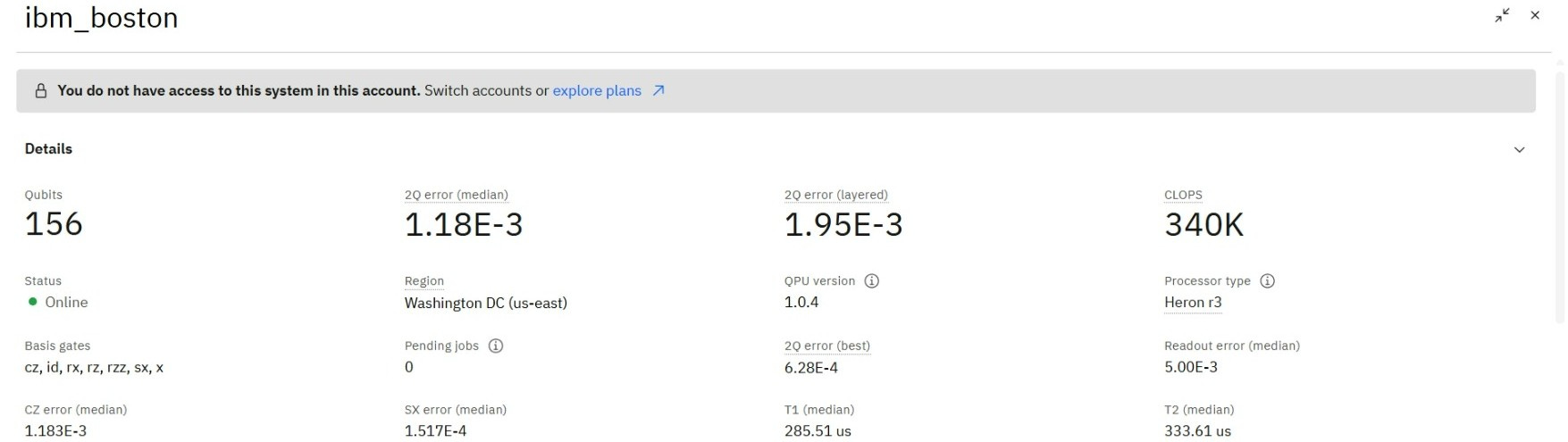
Something missing from all previous versions of this article is a benchmark, something to compare China’s systems to. Numbers don’t tell the entire story, but I’ll nonetheless provide IBM Quantum’s numerically best system as a reference. If I could have taken a readable screenshot of the entire page, you would see that all of ibm_boston’s qubits and qubit connections are available, something that you will find is often not the case as you continue reading. To be fair, IBM has this issue as well, but at least it has shown the capability of making all of the qubits and connections in a 100+ qubit system available.
Alibaba
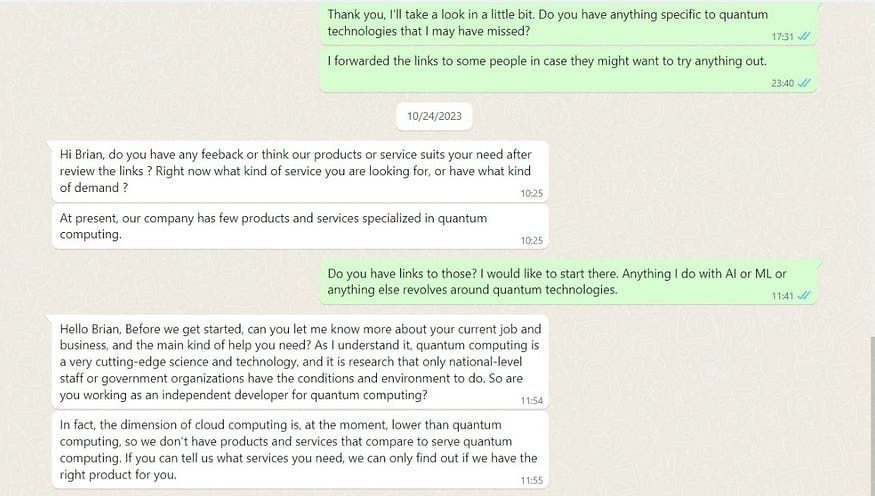
In 2023, I created an account and searched for an alleged 11-qubit superconducting system. I found nothing, so I inquired about it and the reply from Alibaba stated that there were no cloud-based quantum computing products or services. Later news stated that Alibaba was getting out of quantum and sending its tech to Zhejiang University, which showed no evidence of having received it.
Baidu Qian Shi
Baidu once had a publicly available 8-qubit device named Qian Shi. Its specs were 31.0 µs T1, 8.7 µs T2, 99.8% single-qubit gate fidelity, 96.4% CX fidelity, and 96.8% CZ fidelity. In 2024, Baidu was reportedly going to send what it had to BAQIS, but BAQIS has never shown an 8-qubit anything in its portal.
UPDATED! BAQIS Baihua
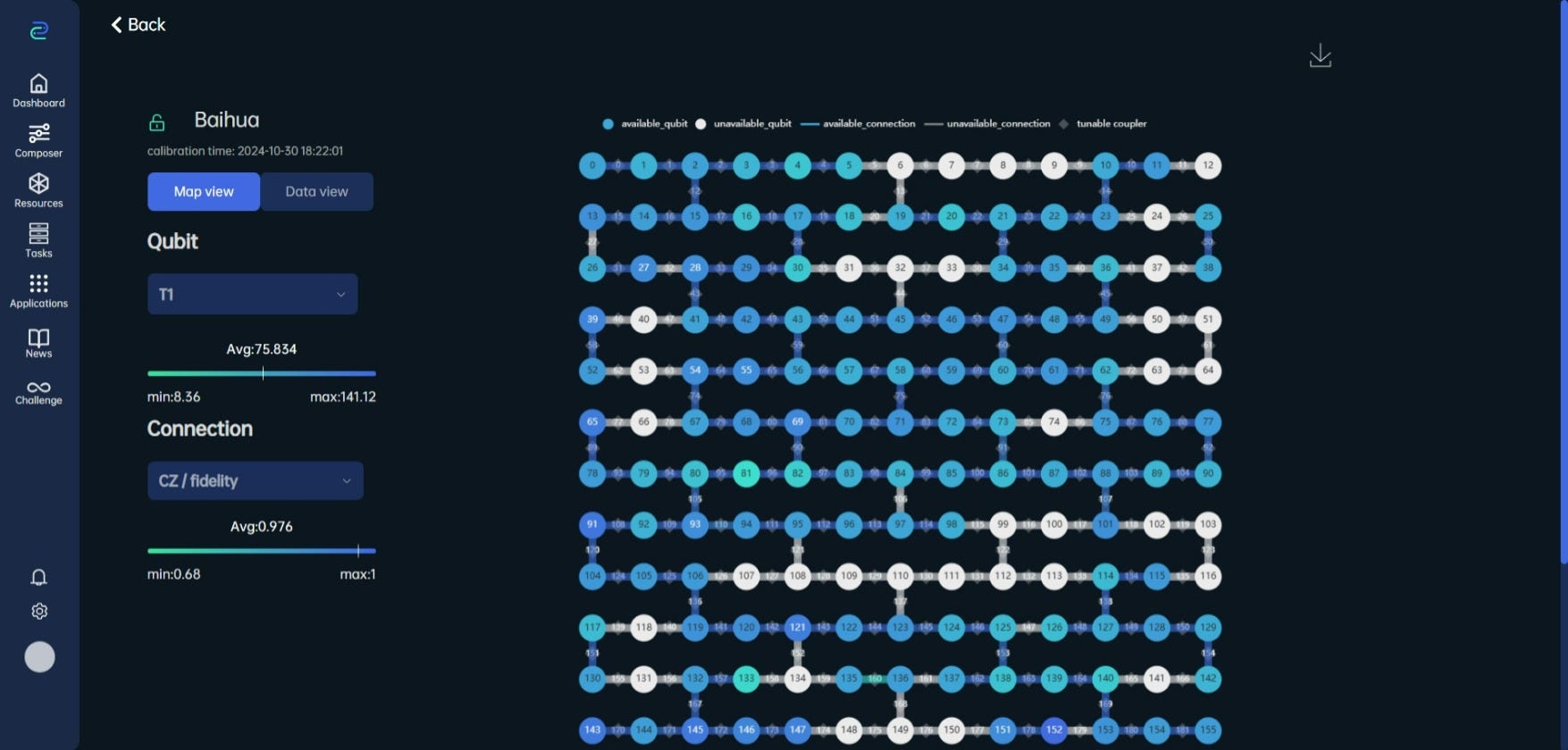
BAQIS currently has 9 systems available, an increase from 6 a year ago, and they range from 3 to 119 qubits. The largest, Baihua, actually has 156 qubits, but only 119 of them are available. The rest of the fleet includes the 105-qubit Dongling, 105-qubit Haituo, 11-qubit ScQ-P21, 10-qubit ScQ-P10, another 10-qubit ScQ-P10, 7-qubit ScQ-P5, 3-qubit ScQ-P3, and 3-qubit ScQ-TEST. Like Baihua, Dongling and Haituo have unavailable qubits; they physically have 130 and 117 qubits, respectively.
NEW! CAS Cold Atom HANYUAN-1
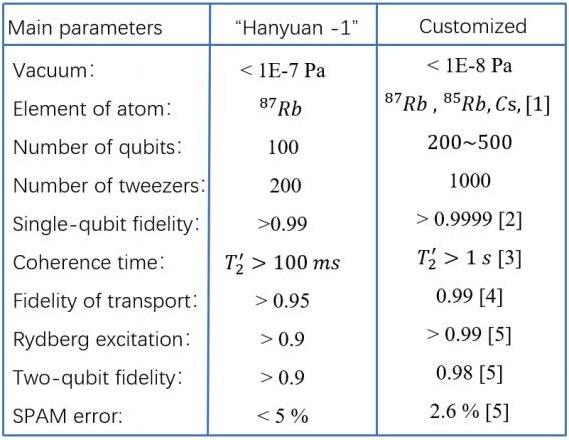
Login requires an account number that I don’t have, and I can’t get an account number because the registration form does not send the verification code needed to register. The table above is from the website. The portal mentions Wuhan University, the Wuhan Institute of Quantum Technology, and Hubei Big Data Group as partners. CAS Cold Atom claims to have sold 2 of these, one within China and one to Pakistan, although that’s not necessarily indicative of quality, as other companies have somehow managed to sell qualitatively poor systems.
UPDATED! China Telecom Zuchongzhi 3.0
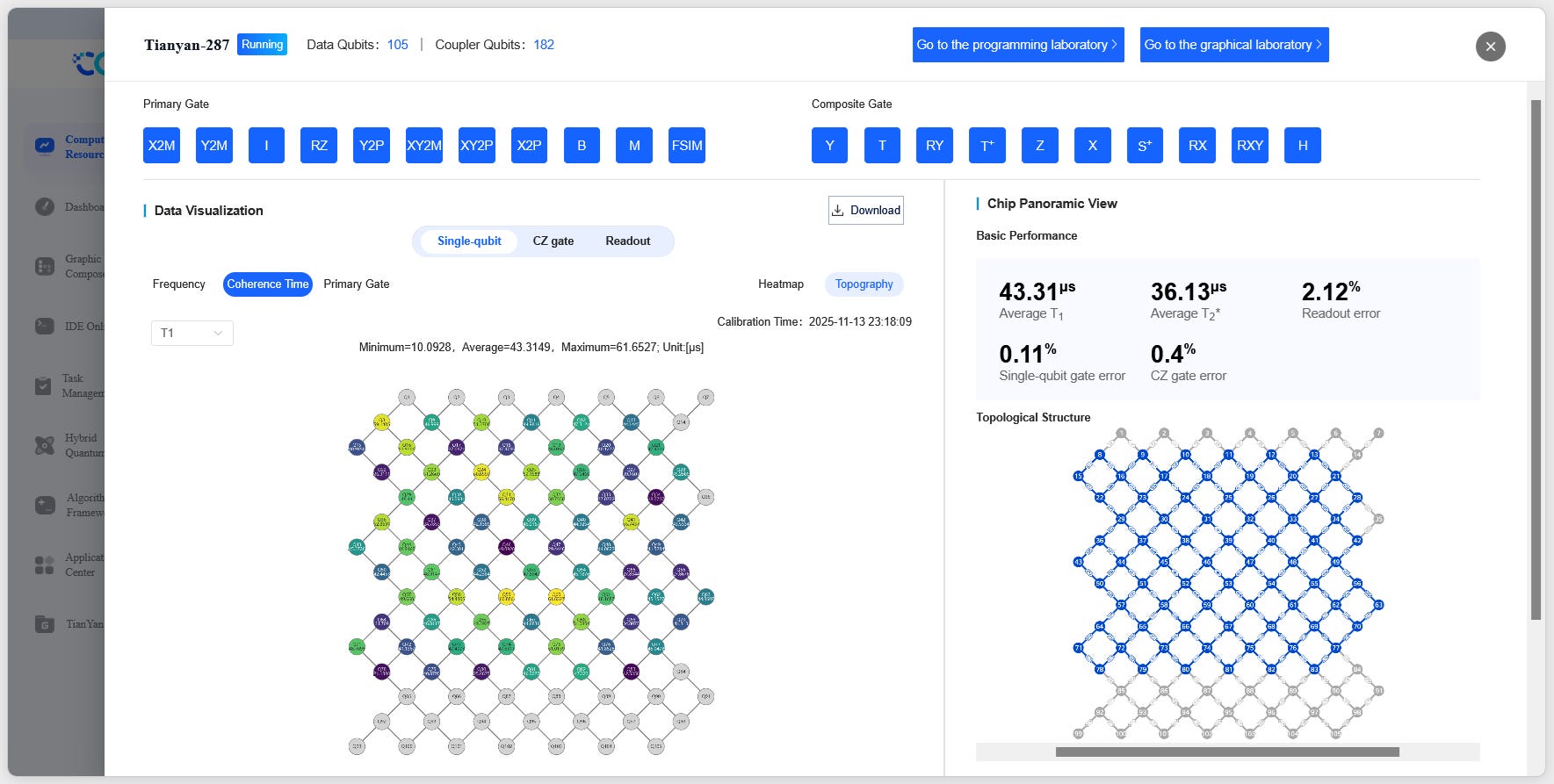
China Telecom has 4 of China’s most-hyped quantum systems: Zuchongzhi 3.0, Tianyan-504, and two Zuchongzhi 2.0. Zuchongzhi 3.0 is new this update. The portal is not working, so I apologetically have to recycle the screenshot from December 19, 2025. It’s actually quite fitting that the portal isn’t working considering the giant swaths of qubits that are not available. The last time the portal was “working,” the drag-and-drop circuit builders generated QASM errors and I couldn’t submit jobs without an account, which I can’t get without a local phone number.
UPDATED! OriginQ Wukong 102-2
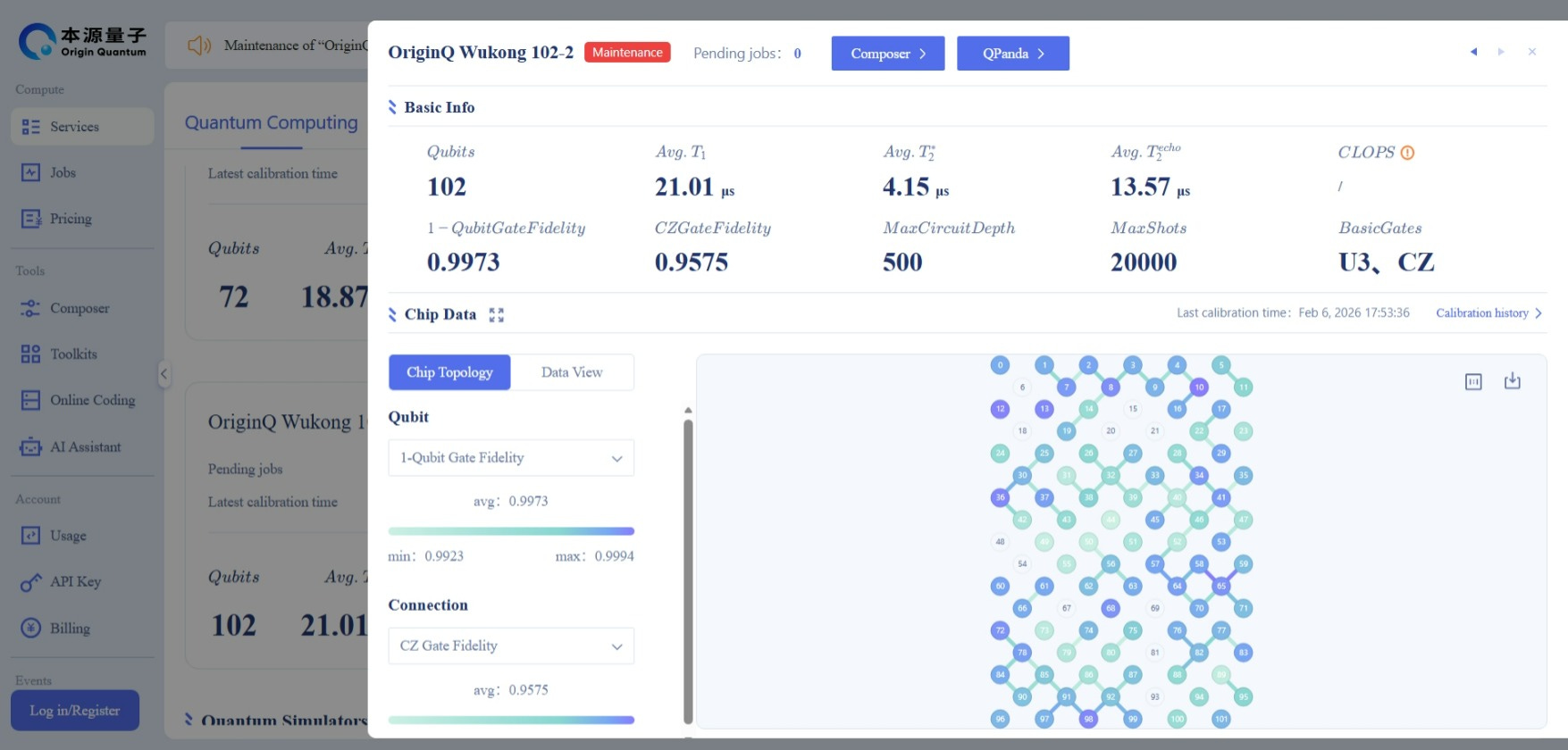
There are currently 3 systems named Wukong, an increase from 1 last year. In declining order of quality, they are the 102-qubit Wukong 102-2, 102-qubit Wukong 102, and 72-qubit Wukong 72. Despite claims that Wukong is being used by researchers around the world, there are currently only 2 jobs in the queue for Wukong 72 while the other 2 systems are undergoing “maintenance.” Let the record show that I am in the same time zone, and the 2-job queue is the record high that I’ve seen. Let the record also show that I played with Wukong while free trials were available in 2024; it was slow and noisy, of course, but what really got my attention was how quickly the qubits relaxed and measured all zeros with toy circuits.
NEW! QBoson CPQC-X
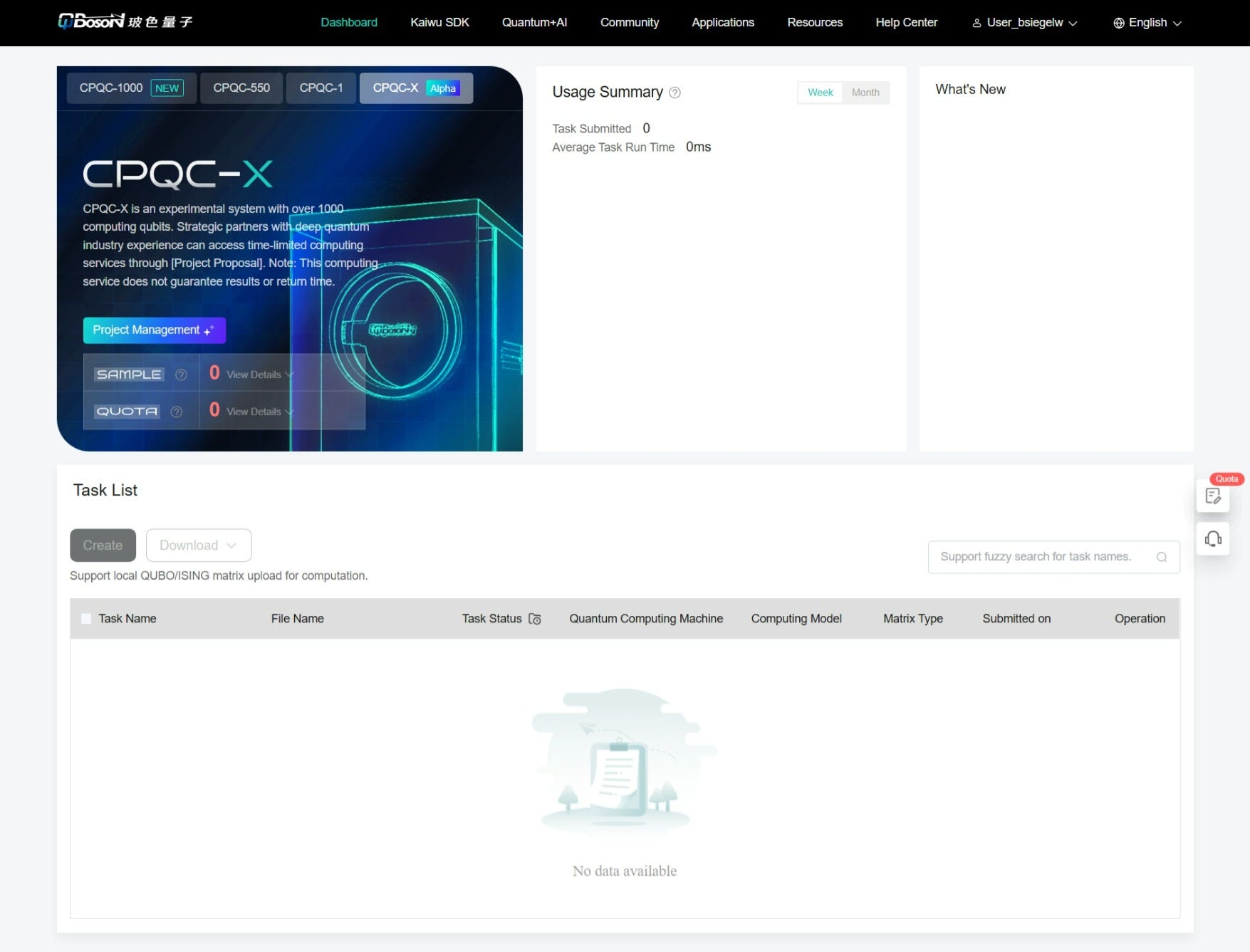
In alpha, CPQC-X claims over 1,000 qubits, but is probably comparable to Quantum Computing Inc.’s (QCi) Dirac series of photonic QUBO/ISING solvers. It is available by submitting a project proposal. The portal also makes available the CPQC-1000, CPQC-550, and CPQC-1 with 1,000, 500, and 100 qubits, respectively, although all are currently listed as “out of service.” I had one interesting result with QCi’s Dirac-3, so I’m not going to dismiss the tech outright, but I am going to stress that I can’t test it.
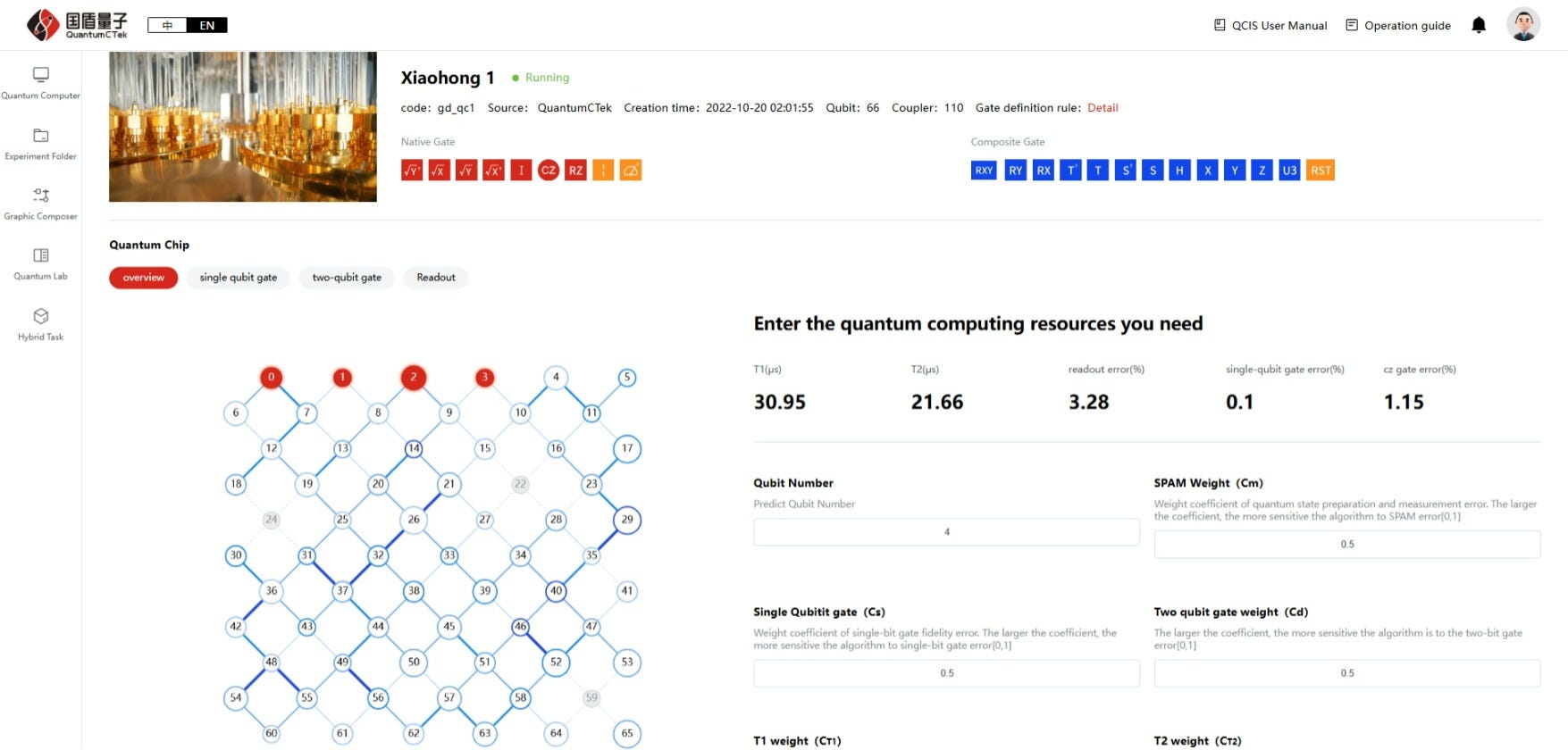
UPDATED! QuantumCTek Xiaohong 1
QuantumCTek currently shows Xiaohong 1, chmy176, and Test Machine One, all with 66 qubits. chmy176 and Test Machine One are new this update. Interestingly, QuantumCTek once announced that it would host a Zuchongzhi 2.0 chip, and all 3 of these devices match the specified qubit counts. Therefore, there are Zuchongzhi-series chips at China Telecom that are using the name, and Zuchongzhi-series chips at QuantumCTek using the Xiaohong name.
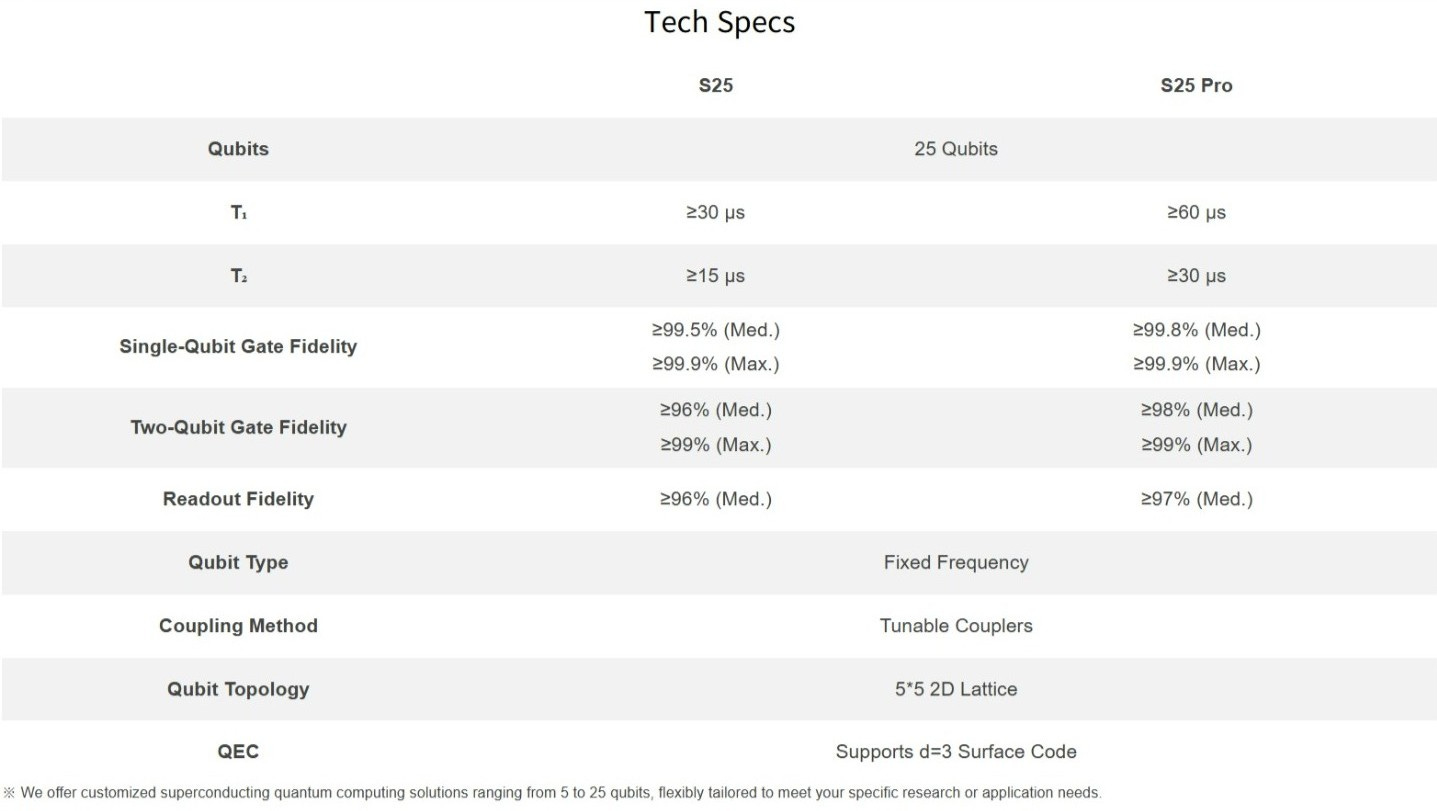
UPDATED! SpinQ S25 Pro
Last year’s model was named SpinQ SQC. SpinQ has started to provide far more information than it used to, if you can believe that. When it is not undergoing maintenance, you can play with an 8-qubit linear topology version online, but that one definitely doesn’t support surface codes. Also, I can’t remember the last time it wasn’t undergoing maintenance. SpinQ claims to have sold an unspecified superconducting system to an unspecified “overseas” customer in 2024, and that’s the extent of the company’s transparency.
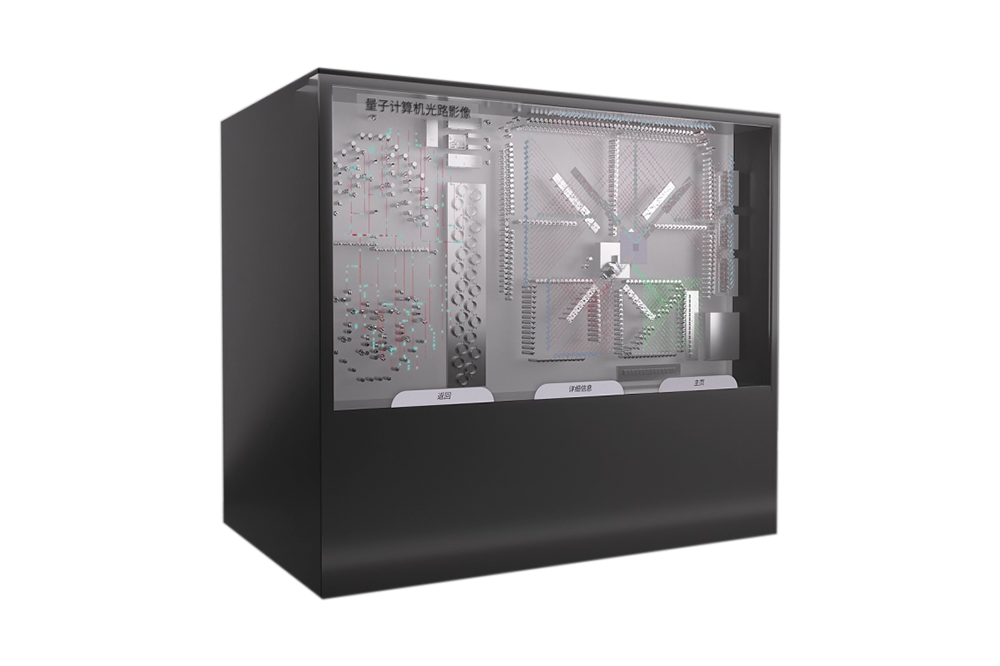
USTC Jiuzhang
I searched for Jiuzhang back when the “supremacy” claim was made and couldn’t find it. I later searched again, in both English and Chinese, and only found this web page, which is down. Before it went down, it stated that “in 2023, the model was permanently collected by the National Museum of China.” I searched the museum’s website and found nothing.
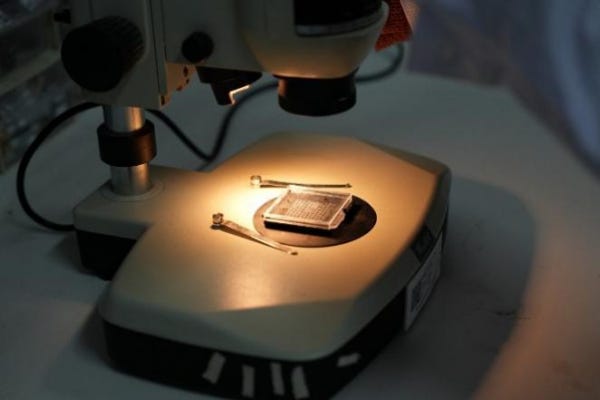
NEW! Zhuangzi 2.0
Developed by the Chinese Academy of Sciences and Peking University, Zhuangzi 2.0 is a 78-qubit chip under a microscope, not a quantum computer. Its predecessor, “Zhuangzi,” was described as a “one-dimensional 43-bit quantum processor.”
Conclusion
It took a while to update this article because it’s anticlimactic. These systems were awful when I first wrote about them several years ago. They have remained awful with each update. And here they are again, disappointing to the very end.
The most damning critique I can provide is that even when some of these systems were accessible, they were not worth using, even for free. They’re not the only worthless systems in the world, in all honesty, but they’re all worthless.
Image generated by Google’s language model AI.